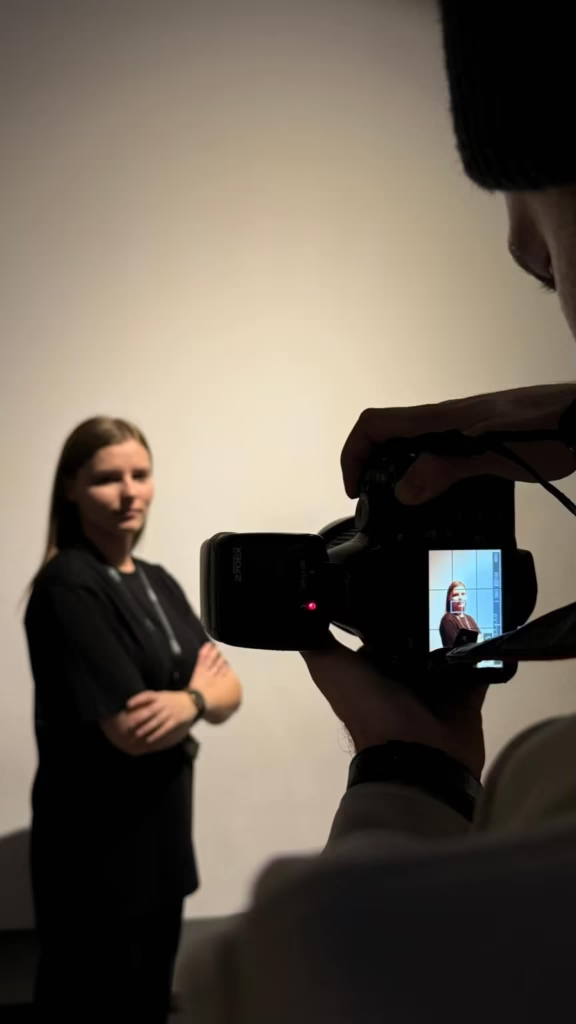
Event photography is not just a person with a camera taking pictures. Good event photos have a clear purpose. In some cases, they are intended as mementos; in others, for communication; and in others still, for partners, social media or to promote future events.
If it is unclear before the event what is most important, you may end up with lots of photos afterwards, but be missing precisely those shots that were most needed. That is why a brief preparation is very practical in this case.
First question: where will the photos be used?
Social media requires lively, instantly recognisable images. The press or partners may need photos of speakers, the stage, logos, the audience and general shots. For internal communications, the focus is on people, the atmosphere and team moments.
When a photographer knows the purpose of the photos, they prioritise their shots differently. If the sponsors are important, they need to be clearly visible. If the guests are important, more attention is paid to their reactions and interactions.
The app helps you make sure you don’t miss the most important moments
A lot happens very quickly at an event. The programme helps you prepare for the opening, speeches, awards, performances, group photos and important meetings. It doesn’t have to be perfect, but it should highlight the priorities.
If there are specific people who need to be photographed, it is best to name them in advance. A photographer may notice a lot, but may not know which guest is particularly important to the organiser.
Space and light make all the difference
A brightly lit conference hall, a dimly lit club, a restaurant or an outdoor event all present completely different conditions. Sometimes additional lighting is needed; at other times, it is better to work with the existing atmosphere so that the photographs do not detract from the mood of the event.
If there are a lot of coloured LEDs, screens or dark areas in the venue, it is worth discussing this before the event. It is not a problem, but it does affect the final visual effect.
What to send before the event
Before the event, it is helpful to send the programme, the venue’s address, the contact person, a list of key figures, priority shots, information about logos or partners, and examples of the kind of atmosphere you are hoping to create.
If you are planning an event, please get in touch via contact form. Please state the date, city and duration of the event in your email, as well as the purpose for which the photos will be used.
How to make photos easy to use
Photos from an event often outlive the event itself. They find their way onto social media, into newsletters, press releases, acknowledgements to partners, websites and communications for the following year. It is therefore worth thinking not only about what to photograph before the event, but also how those photos will be used.
If you need vertical shots for social media, it’s worth mentioning this. If the website requires horizontal photos with more space for text, that’s important too. If partners need to see logos, the photographer needs to know this before the event, not just afterwards.
It is best to send a short list of priorities. For example: speakers, the audience, communication, sponsor visibility, the team, general shots of the venue, and 10 quickly selected photos taken after the event. Such a list helps to avoid overcomplicating the process, whilst ensuring that the most important shots are not left to chance.
When is it worth agreeing to a fast-track selection process?
If the event involves active communication, it is worth agreeing in advance on a few photos to be selected quickly. These can be used on social media, in a newsletter or in a thank-you message to participants on the same day or the following day. This isn’t essential for every event, but when communication is important, such an arrangement helps to maintain the momentum of the event even after it has ended.
Thorough preparation does not mean that the event will be photographed in a dry or static manner. On the contrary, when the technical details have been agreed in advance, more attention can be paid to the atmosphere, the people and the spontaneous moments during the event.